


Are you a musician who loves to travel? Do you find it challenging to bring your full-size guitar with you on your trips? If so, a travel guitar might be the perfect solution for you. In this article, we will discuss everything you need to know about travel guitars, including their types, features, pros and cons, factors to consider when choosing one, and the top travel guitars in the market. We will also provide you with some tips on how to build your own travel guitar and answer some frequently asked questions about travel guitars.
Definition of a Travel Guitar
A travel guitar is a smaller and more compact version of a full-size guitar that is designed for musicians who are always on the go. It is lightweight, portable, and easy to carry around, making it an ideal instrument for traveling, camping, or backpacking.
Brief History of Travel Guitars
Travel guitars have been around for decades, but they only gained popularity in recent years due to the increasing demand for portable and compact musical instruments. The first travel guitar was invented in the 1980s by a company called Backpacker Guitar. Since then, many other companies have started producing their own versions of travel guitars, each with its unique features and designs.
Advantages of Travel Guitars
Travel guitars offer several advantages over full-size guitars, including:
- Portability: Travel guitars are small and lightweight, making them easy to carry around.
- Durability: Travel guitars are designed to withstand the rigors of travel, making them more durable than full-size guitars.
- Affordability: Travel guitars are generally less expensive than full-size guitars, making them a great option for beginners or musicians on a budget.
- Playability: Despite their small size, travel guitars are designed to play and sound like full-size guitars, making them a great option for practicing or performing on the go.
Types of Travel Guitars
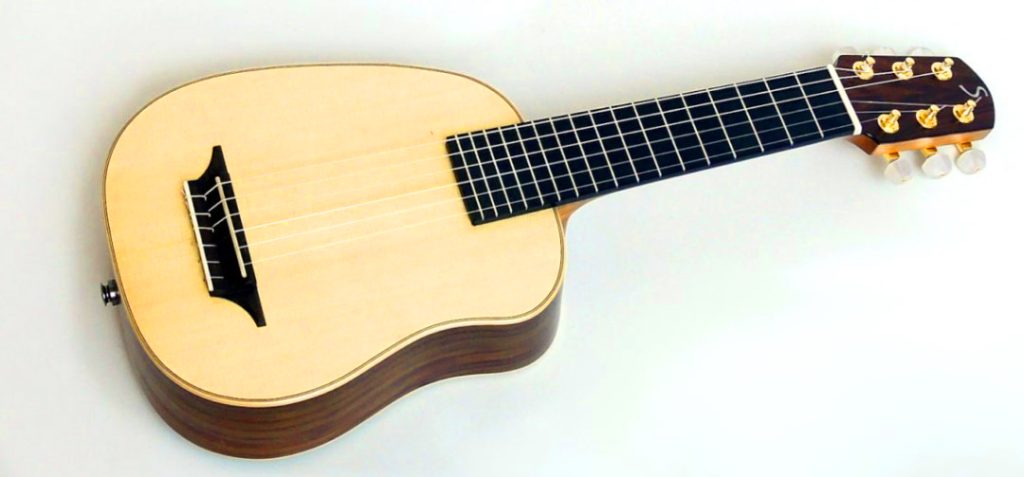
There are three main types of travel guitars: acoustic, electric, and hybrid. Each type has its unique features and advantages.
Acoustic Travel Guitars
Acoustic travel guitars are designed to produce a full and rich sound despite their small size. They are usually made of high-quality wood and come in various shapes and sizes. Some of the features of acoustic travel guitars include:
- Smaller body size
- Shorter scale length
- Narrower neck
- Lightweight design
Pros and Cons
Pros:
- Produces a full and rich sound
- Lightweight and portable
- No need for an amplifier or power source
Cons:
- Limited volume and projection
- May not be suitable for playing with a band or in a loud environment
Electric Travel Guitars
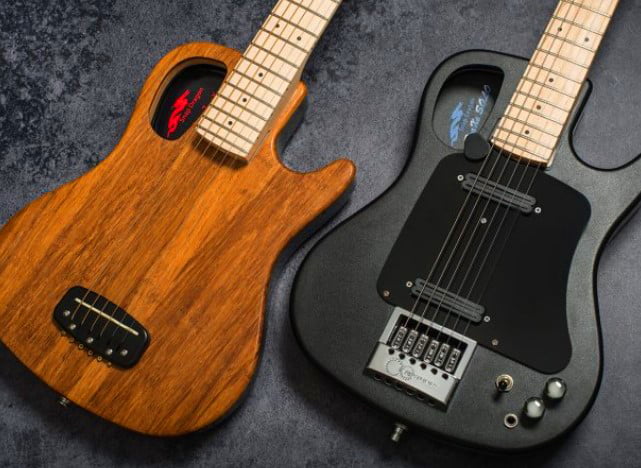
Electric travel guitars are designed to be played with an amplifier and produce a wide range of sounds and effects. They are usually made of lightweight materials and come in various shapes and sizes. Some of the features of electric travel guitars include:
- Solid body design
- Shorter scale length
- Narrower neck
- Built-in pickups and electronics
Pros and Cons
Pros:
- Wide range of sounds and effects
- Lightweight and portable
- Suitable for playing with a band or in a loud environment
Cons:
- Requires an amplifier and power source
- May not produce the same sound quality as a full-size electric guitar
Hybrid Travel Guitars
Hybrid travel guitars combine the features of both acoustic and electric guitars, allowing you to switch between acoustic and electric sounds. They are usually made of high-quality wood and come in various shapes and sizes. Some of the features of hybrid travel guitars include:
- Solid body design
- Built-in pickups and electronics
- Removable top for acoustic sound
Pros and Cons
Pros:
- Versatile and flexible
- Lightweight and portable
- Suitable for playing with a band or in a quiet environment
Cons:
- May not produce the same sound quality as a full-size acoustic or electric guitar
Factors to Consider When Choosing a Travel Guitar
When choosing a travel guitar, there are several factors you need to consider, including:
Size and Weight
The size and weight of a travel guitar are crucial factors to consider, especially if you plan to carry it around with you on your travels. Look for a guitar that is lightweight and compact enough to fit in your backpack or luggage.
Sound Quality
The sound quality of a travel guitar is another important factor to consider. Look for a guitar that produces a full and rich sound despite its small size.
Playability
The playability of a travel guitar is also crucial, especially if you plan to practice or perform on the go. Look for a guitar that is easy to play and comfortable to hold.
Price
The price of a travel guitar is another factor to consider, especially if you are on a budget. Find a guitar that provides top-notch quality without breaking the bank.
Top Travel Guitars in the Market
There are many travel guitars in the market, but some stand out from the rest. Here are some of the top travel guitars in the market:
Taylor Baby Taylor
The Taylor Baby Taylor is a 3/4 size acoustic guitar that is perfect for traveling. It has a solid spruce top, layered sapele back and sides, and a slim neck profile that makes it easy to play.
Martin Backpacker
The Martin Backpacker is a compact and lightweight acoustic guitar that is perfect for backpacking or camping. It has a solid spruce top, mahogany neck, and a unique body shape that makes it easy to carry around.
Yamaha APXT2
APXT2 is a 3/4 size electric-acoustic guitar that is perfect for traveling. It has a spruce top, meranti back and sides, and a System68 pickup and preamp system that allows you to plug it into an amplifier.
Washburn RO10 Rover
The Washburn RO10 Rover is a compact and lightweight acoustic guitar that is perfect for traveling. It has a solid spruce top, mahogany back and sides, and a slim neck profile that makes it easy to play.
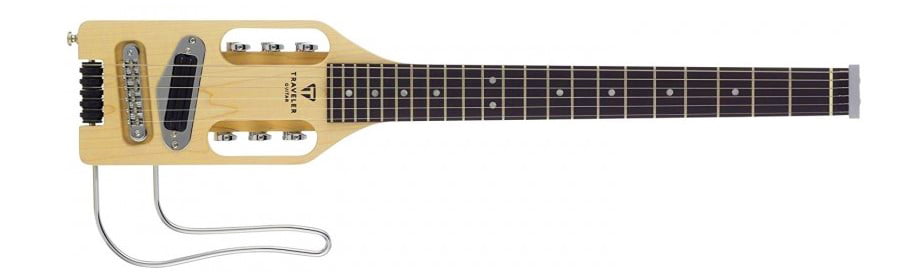
Traveler Guitar Ultra-Light
The Traveler Guitar Ultra-Light is a compact and lightweight electric guitar that is perfect for traveling. It has a solid maple body, a maple neck, and a built-in headphone amplifier that allows you to practice quietly.
DIY Travel Guitars
If you are handy with tools and enjoy building things, you can build your own travel guitar from scratch or convert a full-size guitar into a travel guitar. Here are some tips on how to do it:
Building a Travel Guitar from Scratch
To build a travel guitar from scratch, you will need some woodworking skills and tools. You can find many DIY travel guitar plans and tutorials online that will guide you through the process.
Converting a Full-Size Guitar into a Travel Guitar
To convert a full-size guitar into a travel guitar, you will need to remove the neck and cut the body down to a smaller size. You will also need to install a smaller bridge and nut and adjust the intonation and action.
Conclusion
In conclusion, a travel guitar is a great option for musicians who love to travel. It is portable, lightweight, and easy to carry around, making it an ideal instrument for practicing, performing, or jamming on the go. When choosing a travel guitar, consider its size, weight, sound quality, playability, and price. You can also build your own travel guitar from scratch or convert a full-size guitar into a travel guitar. With the right travel guitar, you can take your music with you wherever you go.
FAQs
- What is the difference between a travel guitar and a full-size guitar?
A travel guitar is smaller and more compact than a full-size guitar, making it easier to carry around. It is also designed to be more durable and affordable than a full-size guitar. - Can you play a travel guitar like a full-size guitar?
Yes, you can play a travel guitar like a full-size guitar, but it may take some time to get used to its smaller size and different feel. - What is the best brand of travel guitar?
There are many great brands of travel guitars, including Taylor, Martin, Yamaha, Washburn, and Traveler Guitar. - Can you use a travel guitar for recording?
Yes, you can use a travel guitar for recording, but you may need to amplify it or use a microphone to capture its sound. - How do you maintain a travel guitar?
To maintain a travel guitar, keep it clean and dry, store it in a protective case, and check its strings and tuning regularly.