


Introduction
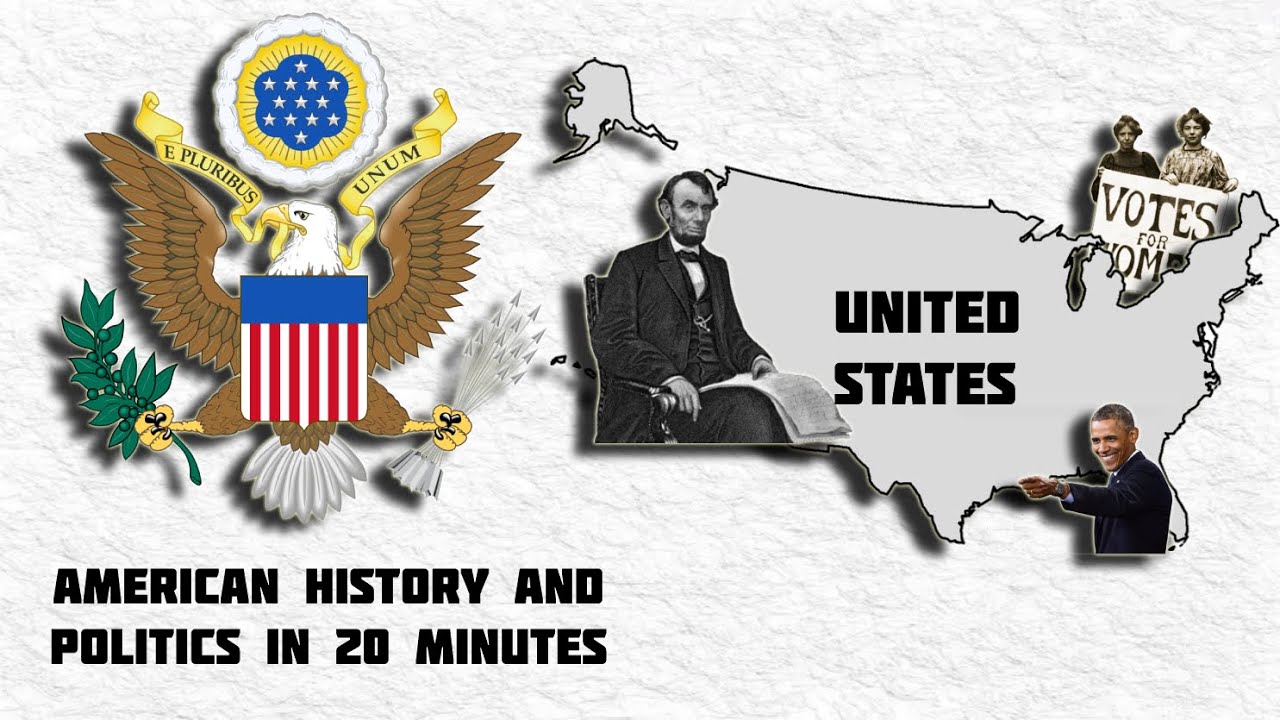
The United States is a country with a remarkable story. From its humble beginnings as a part of the British Empire to its rise as a global superpower, the U.S. has faced numerous challenges — from war and slavery to economic crises and social revolutions. But how did this nation grow to dominate the world stage? Let’s dive into the history and politics of the U.S. and uncover the key moments that shaped the country into what it is today.
The Early Inhabitants of America

Before Europeans arrived in the Americas, the land that is now the U.S. was home to diverse groups of Native American tribes. These early people likely arrived over 17,000 years ago, crossing a land bridge between Siberia and Alaska. Over thousands of years, these populations spread across North America, creating distinct cultural zones based on their environment.
The tribes of the Northwest relied on salmon, berries, and shellfish, while those in the Plains hunted American bison. California’s natives gathered nuts and acorns, while the Southwest tribes built cliff dwellings and farmed beans, corn, and squash. The Northeast’s semi-nomadic tribes grew crops and lived in longhouses, and the Southeast tribes constructed circular homes and mounds. These early inhabitants had complex societies, and by the end of the 15th century, millions of Native Americans lived in the territory that would become the U.S.
European Colonization: Competing for Land

The arrival of Europeans in 1492 marked the beginning of a fierce struggle for control over the lands of North America. Various European powers, including Spain, France, the Netherlands, and England, all laid claims to different regions. Each colony had its unique motivations, from the Spanish founding cities in Florida and the Southwest, to the French settling in the Mississippi and Great Lakes regions.
The English colonies on the Atlantic coast, starting with Jamestown in 1607, would go on to play the most significant role in American history. These colonies were diverse in their goals: Virginia sought economic gains through crops like tobacco, while Massachusetts aimed to provide a haven for Puritans. But the colonies’ competing interests with the Native Americans and other European powers led to centuries of conflict and wars, with the British ultimately emerging as the dominant power by the mid-1700s.
The American Revolution and Independence
The tension between the American colonies and Britain escalated after the French and Indian War. To cover the war costs, the British government imposed taxes on the colonies, leading to widespread resistance. By 1775, open conflict broke out between colonial militias and British soldiers, marking the start of the American Revolution.
The colonists declared independence in 1776, with the famous words, “all men are created equal,” sparking hope for a new nation. However, the revolution was far from easy. Facing the most powerful army in the world, the Americans relied on guerrilla tactics, the support of France, Spain, and the Netherlands, and their determination to gain freedom. After six years of fighting, the British finally surrendered at the Battle of Yorktown in 1781, and the United States was born.
Creating a Nation: The Constitution and Expansion

Winning independence was but the beginning. The newly formed U.S. struggled with creating a unified national government. Initially, under the Articles of Confederation, the little power rested in the central government; hence, instability was common everywhere. By 1787, a Constitutional Convention was held in which a new Constitution was drafted forming a stronger federal government. A balance of power between the states and the national government was established.
This was to be followed by a period of rapid expansion, particularly after the 1803 Louisiana Purchase doubled the size of the country. Throughout the rest of the nineteenth and into the early part of the twentieth century, the U.S. continued to expand its territory, partly impelled by a belief in “Manifest Destiny” — the U.S.’s divinely ordained fate to spread across the continent from sea to sea. While new territories opened up great opportunities, they also heightened the battle over the expansion of slavery that would culminate in the outbreak of the Civil War in 1861.
Civil War and the Fight Over Slavery

The Civil War, sparked by deep divisions between the North and South over slavery, was the bloodiest conflict in American history. Southern states seceded from the Union after the election of Abraham Lincoln, forming the Confederacy. The war lasted from 1861 to 1865, and although the South had early successes, the North’s industrial power and greater numbers eventually won out.
In 1865, the Confederacy surrendered, and slavery was officially abolished. But the end of the war didn’t bring an end to the nation’s challenges. The Reconstruction period saw efforts to rebuild the South and integrate newly freed African Americans into society, but resistance from white Southerners and a lack of federal support resulted in continued racial inequality.
From Industrialization to World Power

After the Civil War, the U.S. rapidly industrialized, becoming a world leader in technology and production. Railroads, factories, and new technologies transformed the economy, making a few men, like John D. Rockefeller and Andrew Carnegie, extremely wealthy. At the same time, millions of immigrants arrived in search of a better life, further fueling industrial growth.
By the early 20th century, the U.S. was expanding its influence beyond its borders, annexing territories like Hawaii and Puerto Rico, and entering World War I in 1917. Although the U.S. initially avoided international conflicts, its involvement in World War II cemented its status as a global superpower. By the end of the war, the U.S. and the Soviet Union emerged as the world’s dominant nations, setting the stage for the Cold War.
The Civil Rights Movement and Social Change
Despite its success on the world stage, the U.S. faced significant social challenges in the 20th century. The Civil Rights Movement of the 1950s and 60s, led by figures like Martin Luther King Jr. and Rosa Parks, fought to end segregation and secure equal rights for African Americans. The movement succeeded in passing important legislation, but the fight for equality is ongoing.
During this time, American society also saw significant changes in gender roles, social norms, and cultural attitudes. From the feminist movement to the LGBTQ+ rights movement, the U.S. became a much more open and diverse society by the late 20th century. However, these changes also brought political backlash, leading to periods of conservative resurgence, including the election of presidents like Ronald Reagan and Donald Trump.
A Journey Through Time: Exploring Route 66
By Town Of Traveller
Conclusion
The history of the United States is one of ambition, conflict, and resilience. From its beginnings as a small group of colonies to its emergence as a global superpower, the U.S. has continually evolved, confronting challenges and seizing opportunities. While the future holds uncertainty, the nation’s past stands as a testament to its capacity for adaptation and overcoming adversity.